What if the United Kingdom of Portugal, Brazil and the Algarves kept existing?
Greetings.
It has been over 110 years since Portugal became a republic, on the 5th of October, 1910. Nowadays, many Portuguese people celebrate this date, as the major event going against the alleged tyranny of the old monarchy. People see it as backwards, stale and corrupt. Yet, something that always intrigued me and still makes me think is that: what if the Portuguese monarchy had continued into the modern day? Would it be as backwards and corrupt as people claim? What if our empire kept existing? Particularly, what if Brazil did not separate from the short-lived United Kingdom of Portugal, Brazil and the Algarves? What if this union kept existing into the modern day and how would it fare out against the various historical obstacles along the way?
This is what I will try to elaborate on, formulating a theory about what the monarch, but also the cortes and Brazil’s regent, could have done to keep Brazil as part of the empire.
Real events
For starters, in order to contextualize, one must have the events from the main timeline in perspective before deviating into different - and, most importantly, realistic - alternatives. The narrative starts in the midst of the Napoleonic Wars, in 1807. Napoleon had conquered most of Europe at this point except for England, France’s biggest rival. His idea was simple: pressure all the crowns of Continental Europe into closing their ports to English ships. This became commonly known as the Continental Blockade. Napoleon would enforce this peacefully through treaties or forcefully by invading the targeted country with the intention of making that country’s monarch subservient to the French emperor. Portugal’s neighbour Spain chose the latter, having Charles IV, and later his son, Ferdinand II, be deposed by Napoleon’s older brother, Joseph Bonaparte. Maria I, Queen of Portugal, during this time, was already considered mentally unfit for taking charge of the Empire, leaving the 32 year-old heir to the throne, Prince João, as the Prince Regent, which occurred in 1799. [1] This was the prince that, when confronted by Napoleon threatening to invade Portugal due to him not complying with the Continental Blockade, he decided to leave his people to their luck and abandon Lisbon, heading to Salvador to form a government-in-exile in November, 1807. [2] This idea had already been discussed way before Napoleon came to power in France in the case of an emergency, the reason being that Portugal was not considered by the cortes to be the “best part of the Monarchy”, in a way admitting that Portugal’s future depended on Brazil and its riches, when it came to the economical and commercial aspects towards the other nations. [2]
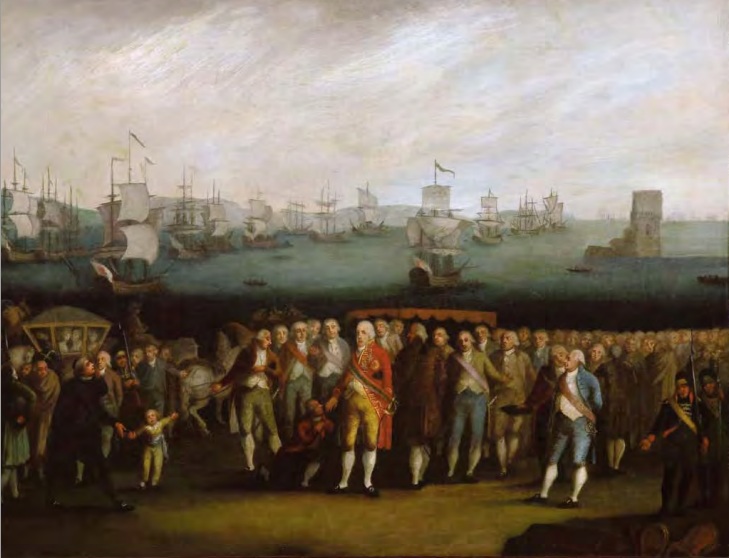
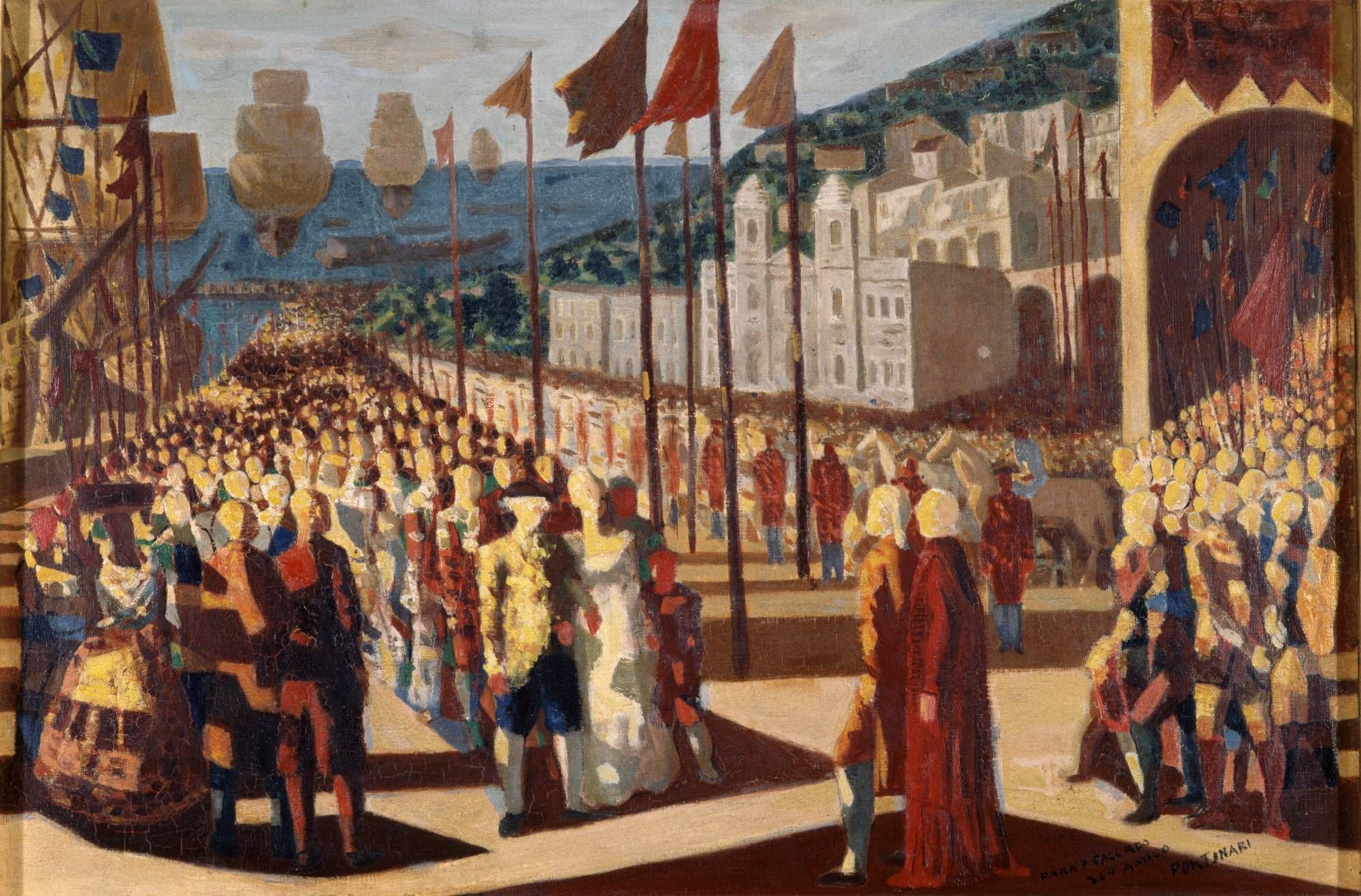
His departure from Lisbon was on the 29th of November, 1807, at 7 o’clock in the morning. This voyage, although considered and planned in the past, was, comprehensively, hastily executed at that moment. Many curious and dumbfounded locals watched as how the “cowardly” king fled his country, as the French grew ever closer towards the Portuguese border. Considered to be a dangerous journey, in which there was no guarantee of arriving to the destination alive due to, not only the long duration, but also the diseases, storms, and also attacks by the French corsairs and pirates [3], it was decided to separate the queen, prince regent, and the heirs in the different naus, at least initially. However, during the embarkation, dona Carlota Joaquina, prince regent João’s spouse, took over the division of the royal family among the different naus. Unwisely, she put the prince regent, Queen Maria I, as well as two of the heirs, Dom Pedro de Alcântara and Dom Miguel in the same nau, risking the loss of a big part of the reigning family in case of a shipwreck. Nevertheless, after packing everything hastily and with all being aboard, the royal family along with other members of the nobility took 2 and half months to reach Salvador under negotiated British escort and protection. Due to the circumstances, the prince regent could not give a proper speech to the people, so instead he ordered the newly appointed regency council to fixate decrees around the city, informing the population to not fight and to not spill blood in vain. The day after, the French army, led by General Junot, “invaded” Lisbon with the force of around 26'000 men without any resistance. [2]
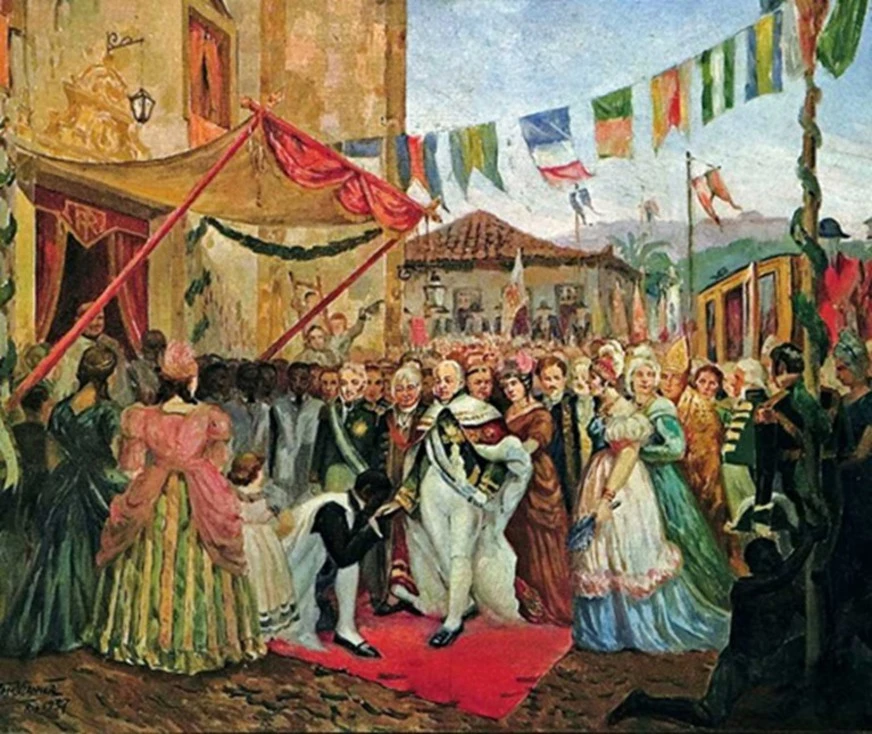
On the 22nd of January, 1808, the Portuguese royal family, along with the cortes, reached Salvador. The prince regent only disembarked the following day, with many Brazilians excited for the arrival of their nobility. Despite the lack of luxuries, the locals decorated the streets the best they could to receive them. On the 28th, the prince regent decreed the “Decreto de Abertura dos Portos às Nações Amigas” - translated to “Decree of the Opening of Ports to Friendly Nations” -, which commercially opened up Brazil to nations friendly to Portugal. [4] This was done due to the negotiation between the Portuguese crown and the British crown: they would accept the request for the escort in exchange for opening the ports of Brazil - exclusively to England at this time -, as well as the creation of a double legislation, in which English people would be subject to an English law on Brazilian soil, and the rest to Portuguese law. [2] This was due to the British always having yearned to gain influence in South America, having even tried to invade the Viceroyalty of the Río de la Plata at one point. Therefore, when they saw Portugal struggling, they had an opportunity to gain influence in Brazil. This double legislation took effect in 1810, along with two other important treaties - Aliança e Amizade (Alliance and Friendship) and Comércio e Navegação (Commerce and Navigation) - [4] , which effectively divided Brazil between England and Portugal, favouring the British by a considerable amount commercially. With these, it basically meant that goods that came from the English crown could be bought for less tax - around 15% - than Portuguese and other nations’ goods - 16% and 24% respectively. [2] As a result, British interests were kept in Brazil because these merchants had the edge over Portuguese merchants. On the contrary, Portuguese influence over its colonies took a hit after this treaty, and as such, Brazil could naturally begin to evolve in terms of the commercial infrastructure due to this opening.
Time passed and the people began questioning the cortes’ appearance in Brazil and whether they were there to improve the life of the inhabitants or not. The discontent ignited due to a measure the prince regent quickly passed on to the inhabitants of the various capitanias - later called provinces - which allowed any member of the nobility to request a house of any civilian for themselves to live in. This became known as the system of aposentadorias. [2] However, the civilian in question had the right to receive a rental fee from the new resident, who complained of, not only it being overly expensive - as presumably the house owner could set any price they desired -, but also the habitations themselves being of poor quality. The houses that would be part of this system usually had an insignia painted on the door with the initials PR, short for Príncipe Regente (prince regent in Portuguese). In a display of protest and mockery, locals began calling these initials Ponha-se na Rua (“throw yourself out on the street” in Portuguese), as the system did not work for both classes. [2] [5] To add insult to injury, the taxes that the prince regent placed on the people served merely for them to pay for the nobility’s food and housing, which, while at first comprehensible, turned into apathy and soon after, revolt. This revolt became justifiable when the cortes revealed that they were mostly otiose and corrupt.
Thus, with the sentiment of the people beginning to sour, small, secret groups started to form and demonstrated their discontent in various forms, starting relatively peacefully, but soon after, becoming increasingly more daring and violent. In 1736, starting way before the Napoleonic Wars, the French Revolution - and even the American Revolution - there were the so-called Motins do Sertão do Rio São Francisco (riots in the Sertão region of the São Francisco River). These were caused by the fact that the Portuguese crown had increased the taxes in that region and other surrounding regions from the capitania of Minas Gerais, where they previously were virtually exempt from paying. These riots started in late March and ended sometime in July, when the last rebels were pacified by the monarchist forces. In this period, however, the locals managed to expel the Ouvidores (auditors in Portuguese) that had been appointed by the crown to inspect and enforce the payment of said taxes. In 1789, a conspiracy occurred, this time with republican and democratic ideas at its core. This conspiracy became known as the Inconfidência Mineira (“Minas Gerais Conspiracy” in English) in which miners wanted concessions from the crown, specifically a reduction to the very high taxes that the cortes was imposing. This happened because this capitania was not able to satisfy the regular gold quotas they had to meet due to the mines drying up. What set this apart from the previous riots was that, this time, these people were inspired by the events of the American Revolution and also of the French Revolution that were happening at this time. As such, this led them to develop separatist feelings towards the crown, such as wanting to create their own republic of Minas Gerais. However, this would be ill fated, as the monarchist forces soon learned of what was happening and the rebels were arrested soon after. [6] [2] One particular individual named José da Silva Xavier - more commonly known as Tiradentes - was one of the notable members of this conspiracy and was executed in 1792. The trials of the conspirators took place 3 years later. He is particularly notable because he would later be seen in Brazil as a national hero and a symbol of the Polícia Militar following the Proclamation of the Republic in 1889. [7]
Two major conspiracies occurred between 1789 and 1801, namely the Conjuração Baiana (Bahian Conspiracy) and the Conspiração dos Suassunas (Suassunas Conspiracy), the former between 1798 and 1799 in the capitania of Bahia and the latter in 1801 in the capitania of Pernambuco. Both had similar ideas: the creation of separatist republics out of these provinces, the idea of more racial equality, free trade, and the abolition of slavery. The fourth was of great controversy, as Brazil had a large dependency on slavery for the farms and mines around the colony. Slavery was one of the last holdouts of the age of colonialism in Brazil, only being officially abolished in 1888 by Princess Isabel, the daughter and heir of Emperor Pedro II, shortly before the republican coup d’etat the following year. The Conspiração dos Suassunas even went as far as to consider hiring Napoleon himself to lead the Brazilian insurrection, which was nothing more than wishful thinking. Both of these conspiracies were discovered by the crown and swiftly dealt with. [8] [9] However, it is clear, even before the arrival of the Queen and the prince regent to the tropics, that the Brazilians had already attempted to overthrow the government.
While Brazil was being fostered by the nobility - for better or worse - back in Portugal the people clamoured for the return of the king. That is, those who remained because, between 1807 and 1814, around half a million people left Portugal and, in England, many Portuguese refugees arrived absolutely poor and miserable. Lisbon was almost a ghost city; people were unemployed and famished. This was not only because of the French occupation and the ensuing battles throughout the country, but also the new treaties in Brazil in which Britain was the preferred commercial partner. This meant that the Portuguese merchants essentially lost all of their way of income and many had to close their doors. As a result, the Portuguese economy plummeted, as there was no meaningful industry or any other trading partners. As Portugal was facing serious hardships, there was the hope that, when the war ended, the treaty would be revoked and the cortes would return to Lisbon. However, this did not happen and thus, revolt started to ferment. After the country was freed from the French, Marshal William Carr Beresford assumed control of Portugal in 1809. Essentially, the people viewed the country as a Brazilian colony and a British protectorate because, after the battle of Vimeiro, which was a decisive battle that changed the course of Portugal, the French ceded all Portuguese seized goods and confiscated money to the British crown instead of the Portuguese regency assigned by King João VI. In 1817, the furious Portuguese people and other members of the nobility planned to depose the marshal, but, in an extreme act of cruelty, he ordered the arrest and the decapitation of the revolutionaries. One of the main personalities in this failed revolution, the general and Freemason Gomes Freire de Andrade, wanted not only to depose the English dominion over Portugal, but also to end the absolute monarchy. Discontent would only further increase as, during the negotiations after the war in 1815, Portugal saw minimal participation, even though the battles fought there were decisive in turning the tide against the French occupation of the Iberian Peninsula. Despite this, the Kingdom of Brazil was recognized by the other crowns in the Congress of Vienna, and thus the United Kingdom of Portugal, Brazil and the Algarves was created. This was done to preemptively avoid the possibility of Brazil breaking away from the metropolis - “metropolis” referring to Lisbon - as the other South American colonies were doing at the time under republican ideologies. [2] However, it was imperative for the King to return to Lisbon as the Portuguese people needed him now more than ever. Yet, João VI did not budge, and everything would change in 1820.
With the country in shambles and desperately in need of reforms in 1818, a secret association was founded. This association became known to the people as the Sinédrio, being founded by the notable judge Manuel Fernandes Tomás, who was a leading figure in the revolution that was to happen in 2 years, as well as José Ferreira Borges, José da Silva Carvalho, and João Ferreira Viana. [10] This association was the building block for everything that ensued in the following years, as they and others in this group coordinated ideas and protests to make the people rise up against British control. The name Sinédrio is notable because it is the Portuguese homonym for the supreme Jewish court in the Bible, which in English, is called Sanhedrin. [11] During this time, the Sinédrio attempted to gain the trust of the majority of Portuguese districts in the north, including, but not limited to Porto, Braga, Viana do Castelo, Vila Real, and Bragança, as well as the respective military leaders from each district. Although the members understood the difficulty of this ordeal, as while they were sympathetic with the idea of kicking the British out of the country and making the King return, they did not agree with the liberal ideas. Initially, according to the historian Oliveira Marques, “The Sinédrio was more so a group of people with the purpose of debating ideas, observing public opinion and events, watching the news of Spain, keeping mutual loyalty [to one another] and secrecy about what happened on the inside, and meeting up monthly” (translated). [12] On the morning of the 24th of August, 1820, members of the Sinédrio along with military leaders and personnel went to a local church to attend mass. Afterwards, they attended a public pronouncement conducted by Sebastião Drago Cabreira at the Campo de Santo Ovídio – currently named Praça da República – in Cedofeita, Porto. This event was characterized by a salvo of 21 artillery shots before two proclamations were made. [13] The first says the following:
➢ Soldiers! One whole will unite us. Let us walk to the salvation of the Fatherland. There are no evils that Portugal does not suffer. There is no suffering that the Portuguese have not endured. […] A reform is necessary, but this reform should be guided by reason and justice, not by [the marshal’s] permission. Support the order; clear the tumults; choke the anarchy. Let us create a provisional government in which we trust. He calls the Cortes, let them be the organ of the Nation, let them prepare a Constitution that ensures our rights. Our king, the lord D. João VI, as a good, as a benign, and as a lover of a people that idolize him, will bless our fatigues. Hail our good King! Hail the Cortes and for them the Constitution! (translated) [1]
There was no resistance to this pronouncement, and in the afternoon, the Junta Provisional do Governo Supremo do Reino (Provisional Junta of the Kingdom’s Supreme Government) was created. [1] An important document entitled “Manifesto aos Portuguezes” was created, in which the junta stabilized the nation, but it also stated what their plans were going forward, mentioning the creation of a Constitution by the cortes, enshrining Catholicism as the state religion, as well as guaranteeing fidelity to the monarch. [14] The Sinédrio was disbanded shortly after, with some of the former members having joined the junta. [10]
On the 29th of August, the regency council reacted by declaring that the newly created junta was a heinous crime against their power and the monarch himself. However, it was clear that the regency was rapidly losing popularity, as the junta had already sympathized with most of northern Portugal, except for a small resistance in Chaves, Vila Real. Having the support, the revolutionaries began marching south, further spreading the word. During the last days of August and the first week of September, all regions to the north of the Mondego River supported the revolution. Small, localized groups of revolutionaries also emerged in Leiria, Tomar, Abrantes, and Santarém, having heard of northern Portugal’s support for the revolution. Soon after, the regency council summoned the count of Barbacena, named Mendonça e Faro, and entrusted to him the command of the troops that would prevent the revolutionaries from marching further south. The revolutionary junta had already sent a letter to the regency leaders asking for peaceful negotiations in which the regency leaders could surrender without any fear of future reprisal. On the 16th of September, the answer they received stated that the regency was not willing to negotiate. The revolutionaries demanded that the regency’s troops leave the city of Coimbra, which, at this point, the junta had already firmly established a presence in. A day prior in Lisbon, a movement ideologically similar to the junta had appeared, also having secret meetings. This movement, led by lieutenant Aurélio José de Morais, amassed a large amount of troops from the Lisbon garrison, proclaiming: “Hail the Cortes that will create our Constitution, hail el-rei D. João VI, hail the dynasty of the House of Braganza, hail the holy religion”. Many locals joined enthusiastically and, now being vastly outnumbered and without popular support, the regency council fell. Although there were some initial problems, after some back and forth with both “governments”, the junta and the interim government in Lisbon agreed to form a joint government composed of a mixed group of the junta and the interim government. [1] Thus, after a day of celebration in Lisbon on the 1st of October, on the following days, the united junta began formally operating and sent a letter to João VI – this letter is dated the 6th of October -, reaffirming their fidelity to him, explaining their reasons and objectives of the movement and asking for his approval so that they could summon the cortes and asked him to return to Portugal. [15]
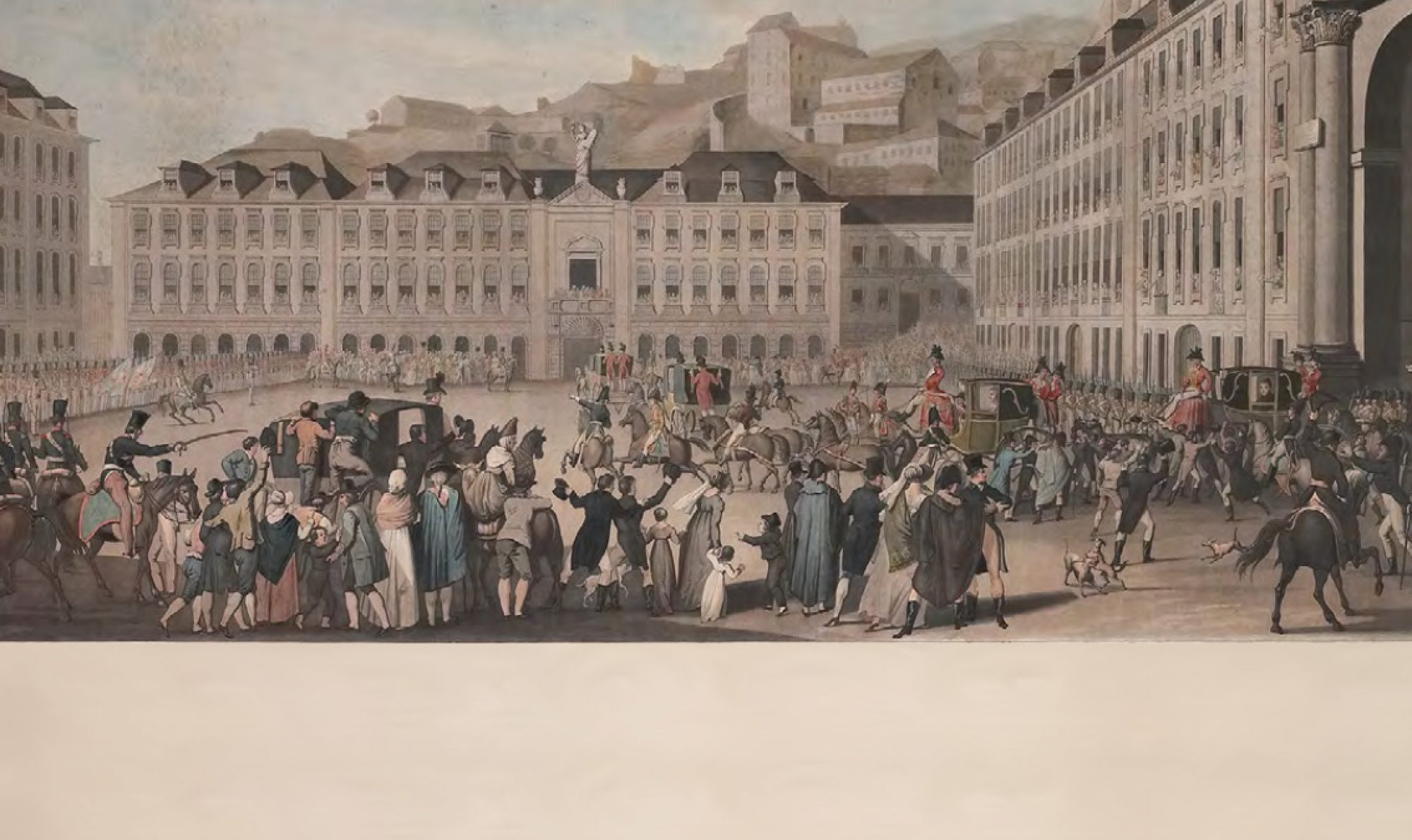
On the 4th of July, 1821, King João VI, after 13 years in Brazil, arrived in Lisbon after being pressured by the junta and the other members of the cortes. Before his departure, he appointed his son, D. Pedro de Alcântara, as regent of the Kingdom of Brazil. [2] In a famous conversation between father and son, who was only 22 years of age at that time, he advised to his son the following:
➢ Pedro, if Brazil separates itself, be it rather for you, who will respect me, than for any of those adventurers. (Pedro, se o Brasil se separar, antes seja para ti, que me hás de respeitar, que para algum desses aventureiros.) [2]
The writing was on the wall: Portugal and Brazil were becoming more and more irreconcilable. On one side, Portugal, under the control of the liberals who wanted to revert Brazil back to being a colony without any autonomy, and on the other side -the Brazilian side- a fervent new nation that wanted to maintain this newly acquired autonomy given by João VI and also fully considered itself as a kingdom. When King João VI arrived and swore loyalty to the constitution that the newly created junta had created, the young prince was summoned to return to Portugal a while later. The reasoning for this was simple: Lisbon would appoint a new Brazilian cortes to assume control of the country and for D. Pedro to leave Brazilian soil. In practice, Lisbon could then attempt to remove powers from the Brazilian cortes more easily and make them subordinate to Portugal. However, these ideas did not materialize, as on the 9th of January, 1822, after many requests by Lisbon for the prince to return, going so far as to threaten to dissolve the cortes appointed in Rio de Janeiro, and a petition signed by many locals begging for him to stay, as well as a small but emotional speech given by José Clemente Pereira, president of the senate hall and Freemason, the young prince proclaimed his defiance to his father by telling the Brazilian people that he would stay, known as the Dia do Fico (I Stay Day). [2] Arguably, this was the point of no return. In response, on the 11th, General Jorge de Avilez, along with his army, attempted to force the prince to return to Lisbon. However, being vastly outnumbered, the revolt was not successful, as it took until the 15th of February for the general to finally surrender, forcing the Portuguese army to retreat back to Portugal. Ironically, no casualties or losses were allegedly reported by either side. Few happen to know this, but Pedro de Alcântara was a freemason himself, with the codename “Guatimozin”, the last Aztec emperor who was killed in 1522. He was initiated into the Freemasons on the 2nd of August, 1822, on the proposal of José Bonifácio. Pedro was elected Grand Master of the Grande Oriente Brasílico on the 4th of October in the same year. [16]
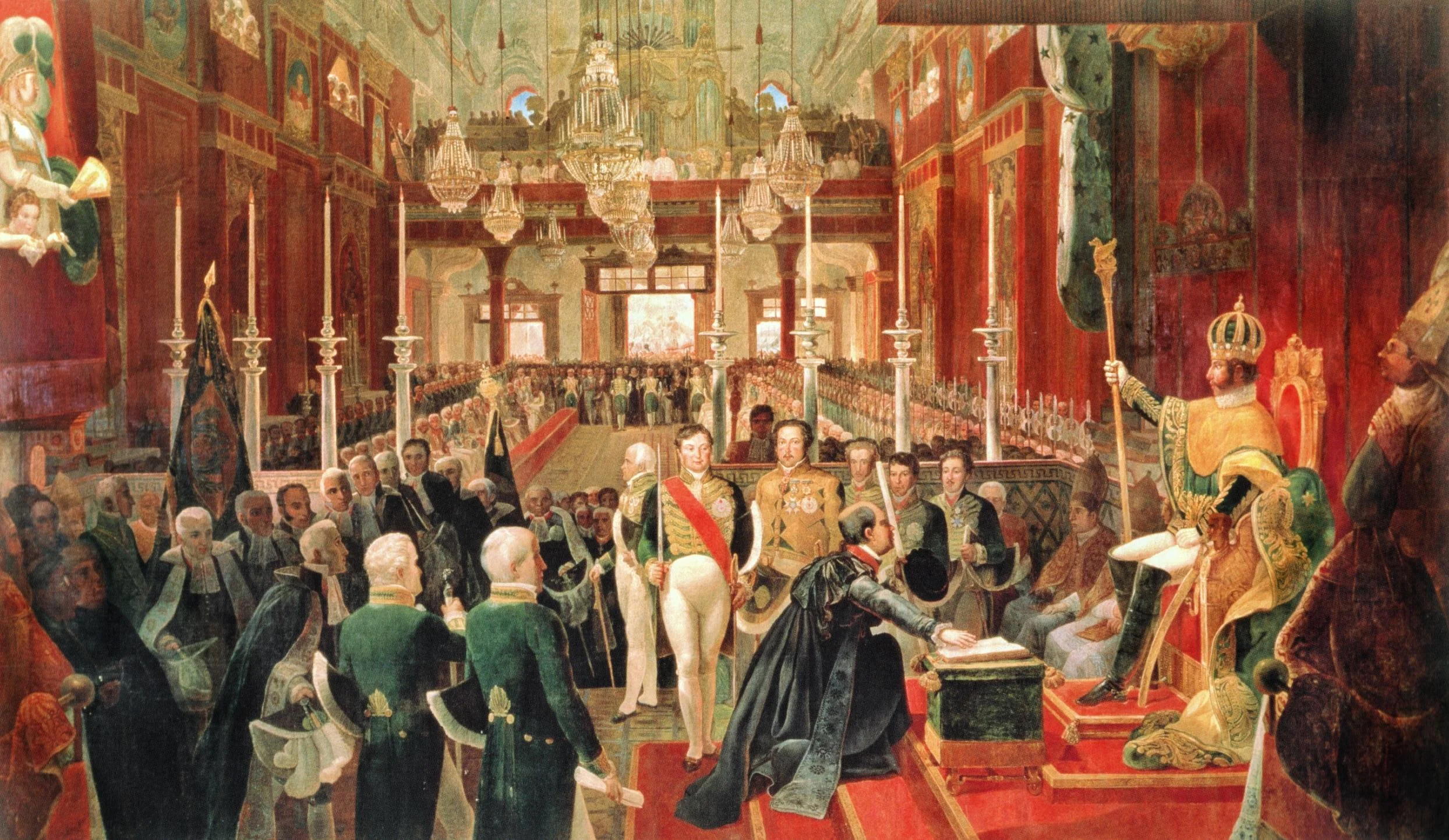
This revolt marked the beginning of the military conflicts between the kingdoms. Even though, on the outside, Pedro attempted to communicate a sense of relative peace between both parts of the Lusitanian united kingdom, on the inside, the rupture was imminent. Meanwhile, inside Brazil, Pedro attempted to find peace and support for his cause among the different provinces, most notably Minas Gerais and São Paulo, being mostly successful. On the 7th of September, after receiving news that the Portuguese crown did not accept the newly instated measures that granted Brazil more autonomy and actively pursued and punished those who applied them, Pedro de Alcântara saw no other choice than to officially break diplomatic relations with the former colonizers and declared Brazil’s independence. This event became known as the Grito do Ipiranga (Ipiranga’s Shout / Scream), as he yelled “Independência ou Morte!” (“Independence or death!”) close to the Ipiranga River, in São Paulo. When he declared this to the paulistas - the name for the locals from São Paulo -, the people rejoiced and the news spread quickly to the other major provinces. [5] Pedro would be proclaimed Constitutional Emperor and Perpetual Defender of Brazil on his birthday, the 12th of October, in Rio de Janeiro, and ceremoniously crowned on the 1st of December, becoming Emperor Pedro I. [17]
With this, the name of the country became “The Empire of Brazil”, separating both nations more from one another. However, even though independence was declared on the 7th of September, this did not mean that every province was happy with the outcome. Many still were loyal to the Portuguese crown and their ideas for recolonizing Brazil. As such, the country fell into a civil war, from around August or September 1821 until March 1824, when the last holdouts of Portuguese and pro-Portuguese Brazilian troops surrendered. Most notably, the provinces of Bahia, Grão-Pará, Maranhão, Piauí, and Cisplatina (now the state of Uruguay) had a very strong Portuguese sentiment towards the newly created state. Portugal only officially recognized the Empire of Brazil as a sovereign state on the 29th of August, 1825, with the Tratado de Amizade entre Portugal e Brasil, thus the United Kingdom of Portugal, Brazil and Algarves ceasing to exist as a result. Even still, after all of this, Pedro I was not well liked by the Brazilian people after just a few years, and, seeing the state of Portugal and the absolutist uprising led by his brother D. Miguel and his mother D. Carlota Joaquina, he abdicated the throne in 1831 and went to Portugal to save the throne for his daughter, Maria; João VI had already died on the 9th of March, 1826. In his place, Pedro I left his son and heir to the throne, Pedro II, to lead Brazil. [17] It was this Pedro, after reaching legal age, who improved Brazil substantially in its economics, relations with other nations, social reforms, and many other important aspects. Despite everything, one cannot deny that, without D. João VI, D. Pedro I and D. Pedro II, Brazil would not be what it is today.
Alternatives
From here, I will give my own take about particular events that could have transpired differently. Again, the objective of this article is to find possible ways to keep both kingdoms united. After deliberation, according to a historic chronological order for when these could happen:
- The Prince Regent stays in Portugal
- The Prince Regent does not develop Brazil
- The king does not leave Brazil
- The absolutist regent of Brazil accepts the orders proposed by Portugal
These can vary in probability, some more likely than others, and there are certainly other points during this timeline that one could argue would help the United Kingdom of Portugal, Brazil, and Algarves’ unity, but these four main alternatives are a good start.
The Prince Regent stays in Portugal
To begin, one can argue that, if the prince regent had not left Portugal along with the royal family and the cortes, the whole ordeal regarding Brazil’s increasing sense of nationalism, as well as their desire for emancipation, would not happen. This is a theory that some historians agree to be plausible. One detail I left unmentioned; back when General Junot was marching towards Lisbon alongside his army, despite the fact that his army was still sizeable, they had lost a considerable amount of soldiers and horses, with the remaining units arriving completely famished, bruised, tired, and unable to fight. If the prince regent had decided to defend Portuguese sovereignty on the Iberian Peninsula along with British aid, there was a decent chance that the French would lose. One could argue that with this faster expulsion of the French from Portugal - despite the multiple French attempts of conquering Lisbon by force in the following years -, a counter offense to remove the French from the peninsula entirely could have happened earlier, allowing Spain to be liberated quicker in the process. Noticeably, if the prince regent was still in Portugal, there would be less of a justification for conspiracies to happen. Granted, they would still occur, as the Masonic lodges were active at this point – most notably the Grand Orient of Portugal (Grande Oriente Lusitano) -, and the liberals were certainly having reunions in the background, but overall, the Sinédrio would not have been created in 1818, at least for the time being. As such, the liberal revolution could have certainly taken more years to happen, dare I say decades. Though, what this would entail, from the perspective of national development, is stagnation. Again, Portugal at this time was in a noticeable decline in its geopolitical relevance, as it only focused on trading products from Brazil to England and other friendly nations. Brazil as we know it would not exist at all, being relegated to another colony like Angola, Mozambique, and the like. The absolute monarchy was not adaptive and it was rapidly becoming obsolete as a form of government. So, one can conclude that, had the united kingdom remained united under an absolutist regime, it would rapidly decay and be unfruitful in the long term, unless reforms or total revolution occurred.
The Prince Regent does not develop Brazil
Another theory, this time definitely more so wishful thinking; assuming the prince regent went to Brazil and stayed for the long term, there is the possibility, albeit small, that he would not develop Brazil as much as he did. Granted, there is hard evidence against this, he personally desired to make Brazil a better place, as it was something of a personal project of his, especially after he started living there and growing fond of it. However, if we assume he had a more laissez-faire position – meaning that he would usually maintain neutrality on a variety of different topics, leaving them for the members of the cortes to handle, and doing the bare minimum to make his stay comfortable for himself and the royal family -, there is the possibility that Brazil would not have acquired a sense of nationalism that would later be developed by D. Pedro I and D. Pedro II. Of course, seeing a prince regent simply stay, forcing the locals to pay for his shelter and food was not going to suffice, even in our timeline, people soon learned what the considerable taxes were for. Therefore, he would need to make a few basic concessions, such as hospitals, schools, and more, slowly improving the conditions of the people, but not the kinds of important institutions he ended up creating, such as courts, police force, and more - in other words, the basic pillars of a nation. Had he left around the time when Portugal was fully liberated from the French, around 1812 or 1813, people would have had as great a justification to revolt. With Portugal secured, the King could safely return and maintain his grip over the colonies. How much the stagnation of the absolutist monarchy would linger without contest is up for debate, but it would not have remained for much longer, considering the fact that the dynamic of the European crowns significantly suffered after Napoleon, with many constitutional monarchies rising across the continent.
The King does not leave Brazil
Arguably one of the more hurtful theories for the union is the possibility that Brazil would take the lead in this union. There is the possibility that the United Kingdom of Portugal, Brazil and the Algarves would remain united - not exactly in the same way as we know it - if the King had not left Brazil at the request of the Portuguese liberal junta, Brazil would very likely remain in the united kingdom. The same could not be said about Portugal, which, upon seeing the King not complying with the junta’s request, would either keep insisting for him to return, or worse, cut ties with the rest of the empire and seek to form a new government without the king. Of course, the main objective of the junta was to make the King return to the metropolis, thus they would try their best to persuade him. However, the King, along with his wife Carlota’s support for the idea of not accepting the junta’s demands, would not comply. After all, there is hard evidence that the King felt sad when he left Brazil in our timeline, so much as to postpone his return by months.
Secession would follow, with plenty of Brazilian provinces, who had healthy ties with Lisbon, adhering to the liberal cause, most notably Cisplatina, but also Bahia, Maranhão, and more. From here, these provinces could also declare themselves to be part of the new Lisbon government - despite their divergences - and would not want to side with the King. Here, the simple disagreement would evolve into frustration, frustration into threats, and threats into an outright conflict between the King and the “adventurers”, thus causing an imperial civil war. How this war would transpire is hard to tell, but one outcome would be the gradual pacification of the liberal sympathizers by the king’s forces, unifying the territory of Brazil once more. From there, there could exist the inverse of what happened in our time, in which the King, from Brazil, would order an inevitable invasion of Portugal, effectively declaring Portugal as a “colony” of Brazil. The liberal junta would not have the power to defend their government, having a very disorganized military and no British aid to aid in the defense of Portugal, as they would not get involved. After all, the junta had just kicked Marshal Beresford out of Lisbon years prior, so they were in no position to ask for British support to defend themselves from their own King, as well as to possibly attack the territory the English crown itself was more economically interested in. If anything, the British would align themselves more with the King and the Rio government, in a way betraying the historical alliance of Portugal and Britain. Suffice to say, the invasion of Portugal and other minor territories such as Madeira, Azores, and others would not have many issues, if any.
From here, to make the people of Portugal satisfied, a regent would be instated, most likely King João’s son, D. Pedro de Alcântara, in order to inform the king on what the people needed in this “province” of the empire. Concerning D. Pedro’s given powers in Portugal, it is hard to say what João VI would do, they would either give him extensive powers like the ones he gave in our timeline or he would merely be a figurehead. Either way, with the union stabilized, the King could assume a bolder position and declare Rio de Janeiro as the de jure and de facto capital of the newly declared Lusitanian Empire, seeing as there would be no reason to have a united kingdom anymore. After all, in the eyes of the now emperor, Brazil is Portugal and the legitimate Portuguese government had merely moved to the most profitable part of the empire. With the emperor in Brazil, Rio would now be the new metropolis, relegating Lisbon to irrelevance. Portugal as a whole would still not fall into obsolescence, as a few institutions were still praised and vital for the empire, most notably the University of Coimbra. Though, in due time, and with the Emperor’s plans and enthusiasm in improving Brazil, this would be altered. Knowing D. Pedro, as, since a very young age, he had very progressive ideas, even if he worked with the liberals, both in Portugal and Brazil, they would suffer many hardships in creating any meaningful insurrection. Thus, for the time being, the Lusitanian Empire would remain as one of the last bastions of an absolutist monarchy, both in the European as well as in the South American continent.
The Absolutist Regent of Brazil rejects the orders proposed by Portugal
Another possible idea is that, with the King having returned to Portugal at the request of the junta and left an absolutist D. Pedro as the regent of Brazil, D. Pedro himself could reject the orders given by the King. Initially, it seems like the same timeline as our own, yet the outcome would be very different. The D. Pedro from our timeline had a more progressive view on politics since he was young, aligning more closely with the liberals and being a freemason himself as mentioned before. He understood that independence at this stage was inevitable, so, to avoid other types of governments, and to ensure Brazilian autonomy, he went against the orders of his father and stood with the Brazilian people. Therefore, in order to develop this theory further, one would have to assume that for whichever reason D. Pedro was more aligned with his father and his brother Miguel. Either through a more authoritarian education or simply that his opinion was different in this timeline. Knowing that he would more or less have the same ideas as his father: keeping the union together under two kingdoms. Now, this is an awkward position for the young prince, as, on one hand, if he accepts the orders the junta and his father gave him, it would spell disaster for the kingdom, leading to a very easy way for the various provinces to declare independence themselves as their own republics. Yet, on the other hand, if he rejected the orders, he would be going against his father. One must understand that this absolutist Pedro would think that his father was being coerced by the junta for him to return, so, in order to maintain the union, he would have to reject the orders regardless. The problem would arguably be the cortes surrounding him, which were exposed to constitutional ideas since the liberal revolution in 1820. Here, despite their divergence in a few matters, mostly regarding the existence of a constitution and the powers given to the king, these elites would still mostly side with D. Pedro, as he guaranteed Brazilian autonomy.
Therefore, the liberal junta in Portugal could not realistically consider the insubordination of D. Pedro to be illegitimate, as he had a cortes and a functional governing body in Rio. Assuming absolutist Pedro manages to make this happen, he would be able to maintain a mostly unified Brazil and his claims recognizing the monarchy under Brazilian institutions to be legitimate, as it was in 1808. D. Pedro would not declare independence, as his idea of preserving the union was imperative. Therefore, from a legitimacy point of view, the Portuguese liberal junta would be in a very tough spot, as they simply could not say that D. Pedro was a rebel ruling over a Portuguese colony, as he was a regent in the name of João VI. Politically, in my view, it would be a complete stalemate, as ultimately Portugal would have the king being held captive by the junta, who officially swore loyalty to the constitution, and Brazil would not have declared independence and was being governed by the prince regent under the king’s name, who defended the union alongside an autonomous Brazil. Unless the junta found a way to make the regent’s rule over Brazil void, for example, with a document “issued by the king” in which he said that his own son was going against his wishes of unifying the empire under a liberal constitution - which D. Pedro could easily refute by claiming that the king was being coerced, going against his own word under the legitimate monarchy, before departing to Lisbon -, there was not much that could be done to break the stalemate. Regardless, I find a war to be difficult to wager in this situation, though, if it for some reason escalated to one, the legitimate monarchy would prevail, as, again, the Portuguese military was not equivalent with the Brazilian military.
Implications
Assessing how the union would evolve going forward is difficult as, obviously, it would depend on the type of government it would have. Let’s assume, for this example, that the union was kept under the legitimate government of João VI, considering he defied the junta and never went off to Portugal to begin with, and where Brazil’s autonomy under the union was ensured with Portugal being freed from the junta by military force; assuming the king had Portugal under relative control by the cortes loyal to him or at the very least absolutist militias had risen up and taken important cities, going forward the union would have to deal with national and international affairs that could risk it once more. In particular, the Cisplatine War in 1825, as well as an internal divide of the cortes, as, yet again, due to the constitutional ideas floating around, one block would urge the king to allow the cortes to elaborate a document that he would have to swear, whereas the remainder of the council would not want these changes. The king would therefore have to find a middle ground and perhaps some sort of constitution would be formed, limiting his powers somewhat. Although the compromise would nott particularly appease both sides of the cortes, considering Brazil was quite autonomous inside the union, there’s potential for them to, for the time being, stand behind the king without too many problems. After all, the only real threat to Brazil’s autonomy was the liberal junta in Portugal. Regarding the Cisplatine War, nothing would really change and the union would still be at a stalemate just like the real timeline. The British would have to mediate the conflict and end it by proclaiming the Oriental Republic of Uruguay, thus Brazil losing Cisplatina.
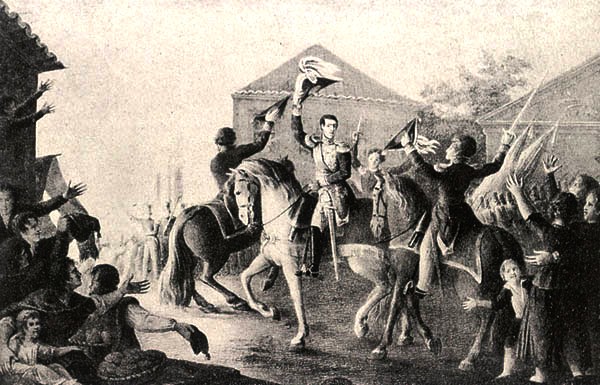
Around the same time, in our timeline, the Vilafrancada happened, in which the junta was overthrown by D. Miguel and João VI reinstated the absolutist regime, although with a few changes more akin to a constitutional monarchy. In this timeline, it could happen, but in such a way that would help tighten João VI’s grip on Portugal. In the worst case scenario, if the Brazilian “invasion” of Portugal had not taken place, it would be the Vilafrancada that would ignite the counterrevolution in Portugal for the absolutist cause. I do not see the Portuguese civil war taking place, at least not in the same way as it did in our timeline in which D. Pedro and D. Miguel were fighting for the Portuguese throne, as the liberals were being suppressed in both Brazil and Portugal at this time. Granted, due to the king abandoning them, Portugal’s population placed their faith in liberalism and the military was swayed, therefore the Vilafrancada could serve as an equalizer to split opinions once more on this matter. It is important to note that the Vilafrancada happened because some Portuguese marshals and generals lost a lot of prestige, thus, they would be vital in returning Portugal to absolutism. After all, the population wanted the king back, but most likely did not consider that the union would suffer greatly if that were to happen under the junta’s rule. If for some reason the war were to happen, these liberals would either find someone else in the royal family to consider making their king/queen, or worse, they would fight for themselves in hopes of establishing a republic, way before our timeline in 1910. It is important to note that the masonic lodges were hard at work throughout Europe discussing a redesign in the political landscape, so seeing a union between Portugal and Brazil with an absolutist / semi-constitutionalist regime was in their best interest to keep talking about and trying to shape into something resembling a more republican system. However, considering what happened after the Vilafrancada, there is little doubt that the cortes would decide to prohibit secret societies within the union, issuing harsh penalties to all involved with them. So, in a way, these societies would be limited in their activity.
Another thing worthy of noting is who would be the king after 1826, because it was in March of that year that King João VI died in Portugal in our timeline. According to some theories, this death was attributed to him being poisoned. If this was avoided in this timeline, I see a possibility of him living past this date, as in Brazil, he would be seen in a more positive light than he was in Portugal. After all, he single-handedly turned Brazil into a full-fledged kingdom as part of the Lusitanian union. Assuming that this would be the case, his reign would definitely have been a few years longer than it was, probably until the 1830s, where, from there, D. Pedro de Alcântara would assume the throne as Pedro IV of Portugal, Brazil and the Algarves. Of course, he would pose another problem to the absolutist / liberal power dynamic, as, in our timeline, he was more progressive, while his father, in this timeline - as well as in our timeline -, had a more moderate view and tried to appease both sides to the best of his ability. Therefore, depending on D. Pedro’s plans, this matter could resurface once more and the union could be in peril. One important detail is that he wanted the union to keep existing in our timeline and, seeing that Brazil was autonomous under it, he could probably maintain the system that his father left him to some extent.
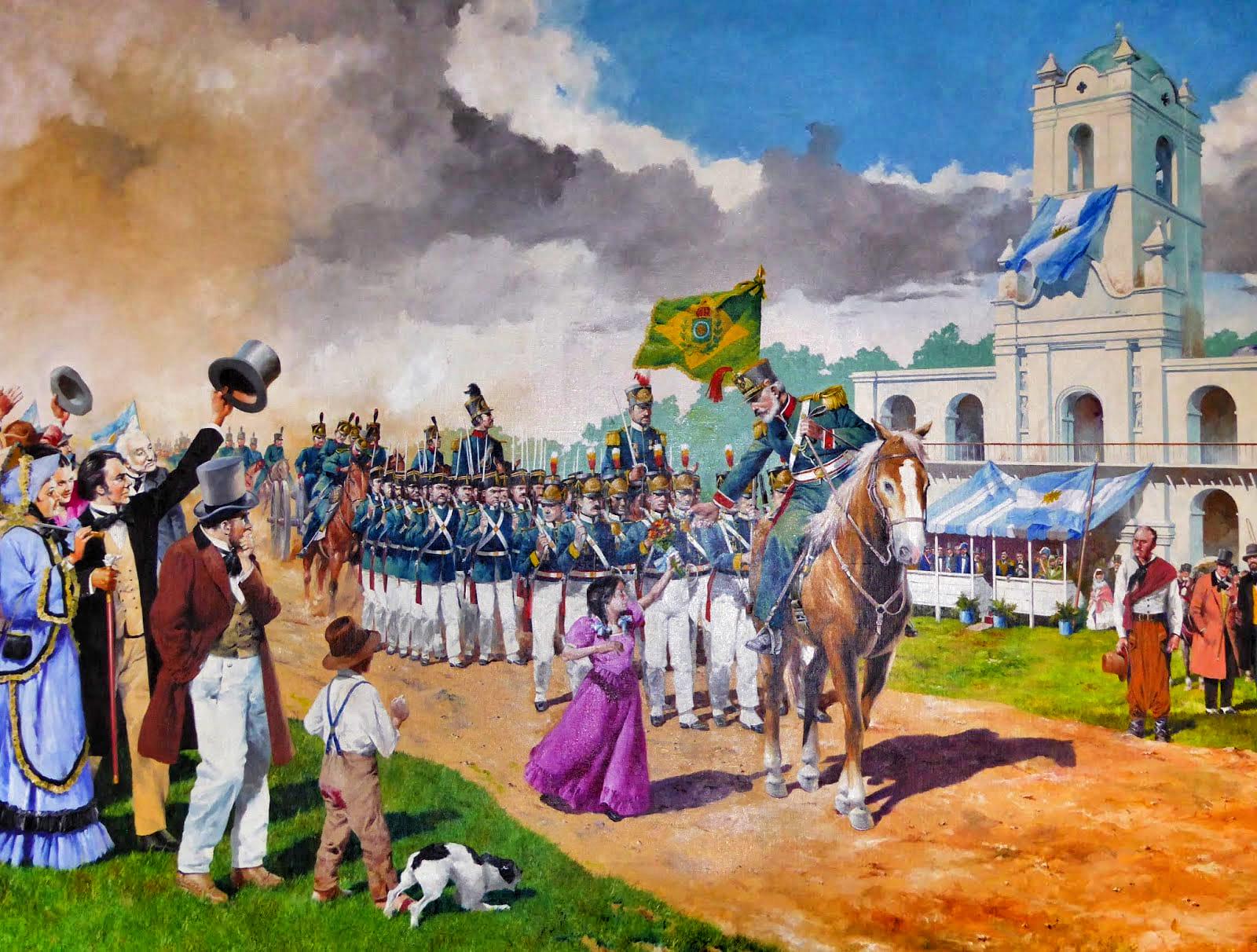
One could also mention the Platine Wars, most notably the Uruguayan and the Paraguayan Wars in 1864 - 1865 and 1864 - 1870 respectively. I do not believe that these would affect the union, considering that many years would have passed and the government would have a decent chance of stabilizing itself. Assuming these conflicts happened the same as in our timeline, the Triple Alliance made up of Argentina, Uruguay, and the Lusitanian Empire - the latter name is up to debate, but let us assume that it would be called this - would be formed and the allies would win this conflict. Before and during the 1880s in our timeline, particularly in Brazil, the liberals were strongly against slavery and the continuation of the slave trade, although this opinion was in the minority. The British had a large impact on the slave trade between Brazil and Africa during the mid 1800s, going as far as to sign the Aberdeen Act, which stated that the British navy had the authorization to seize slave ships outside of their own waters. Even though Pedro II of Brazil himself was opposed to slavery, very few Brazilians were and as such this process of abolition dragged on until 1889, when D. Isabel, his daughter and heir, issued the Lei Áurea, which effectively made all slaves free. In our alternate timeline, something similar could have happened. Something important to note is that, despite the apparent political calmness in the union, the constitutionalists would still riot and revolt over the current government under the king, in which this constitution still gave him too much power in their opinions. Therefore, they would use the idea of abolishing slavery in the empire as justification for their cause. This would not be the case if the king started working with the United Kingdom to slowly but surely abolish slavery. It would benefit not only their position with the liberals -who would see the government acting on it, removing the legitimacy of their movement,- but also answering the international demands to abolish slavery.
Speaking of the republican movements during the late 1880s in Brazil and the start of the 20th century in Portugal, in this timeline, there is still a chance for them to happen. Though by this time, having two opposing ideologies in the form of the constitutional monarchists and the republicans would do more harm than good to the current power dynamic. Thus, the existing semi-constitutional monarchy would be able to thrive and strengthen its stability in the empire. If this semi-constitutional model kept with the times and took the demands of the liberals seriously, it would prove to be very durable and thrive overall. One of advantages that the republicans had was in regards to the “pink map”, which refers to the humiliation that Portugal suffered nationally and internationally following the British Ultimatum in 1890. Prior to this ultimatum, the Portuguese Empire wanted to form a land connection between their African colonies of Angola and Mozambique, attempting to assert control over the land of modern-day Zambia. However, the British wished to build a railway from their colony in South Africa to their holdings in Egypt, meaning that they wanted this land for themselves, using this ultimatum as a way to take control of this land, thereby denying it to Portugal. Had this Lusitanian Empire kept its integrity, the British would definitely attempt to make a fairer deal with the union, thus boosting the union’s legitimacy and cementing their world position. After all, the British would not simply antagonize a transatlantic empire over this plan that they had for Africa. As such, the union and Britain would reach a deal in which both parties benefited.
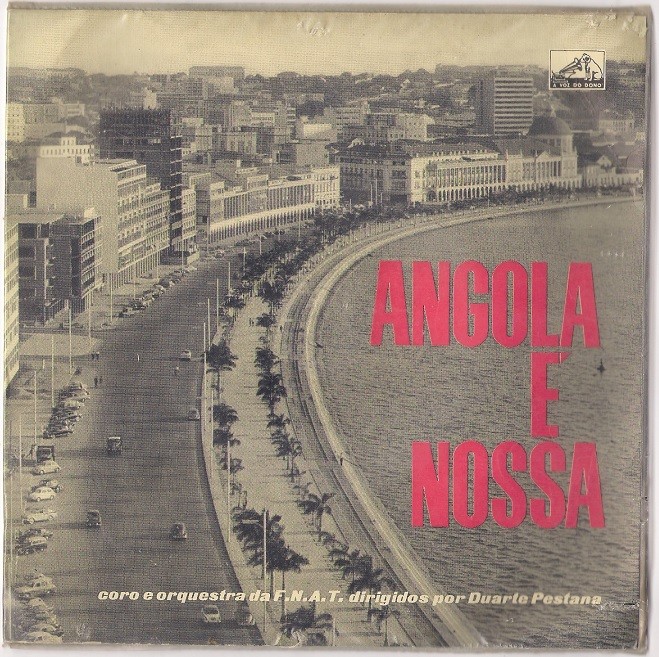
Another important thing to mention would be the position of the empire with the other colonies. In our timeline, after the independence of Brazil, Portugal maintained all of its colonies, including Angola, Mozambique, Portuguese Guinea, São Tomé e Príncipe, Cabo Verde, Macau, Goa, Damão and East Timor. However, during the dictatorship period more commonly known as Estado Novo, the international community as well as the United Nations pressured Portugal to decolonize. The leader during this time, António Salazar, claimed that these were overseas provinces and efforts were made to assimilate them into parts of Portugal, though this was not successful. Shortly after the Carnation Revolution, the new republic granted independence all the former colonies, not only due to the international pressure and the colonial wars, but also because other nations were taking them by force, such as India in regards to Damão and Goa in 1961. In this timeline, however, the empire would need to have a more assertive attitude towards the African and Asian colonies. After all, Portugal started caring more about Africa shortly after Brazil’s independence in our timeline, for instance, the greater efforts in mapping and surveying of the colonies’ interior, larger administrative investment, and more. Thus, understanding that the union was kept in this alternate timeline, one could assume that the empire would start to become more concerned with the colonies after the union was stabilized, around 1850. Again, one of the problems that severely affected Portugal and the colonies after the independence of Brazil was weak industry. The empire would have to rapidly improving in this aspect, both in Portugal proper as well as Brazil. From there, having a larger industry would mean more revenue which could then be funneled into more industry, roadways and railroads, hospitals, and more in the colonies, therefore improving the lives of the people living there, as well as allowing them more knowledgeable and trained. Internationally, this would also showcase the union’s power and sovereignty, with it being able to be more competitive in the “colonial arms race” of the 1870s - 1890s with the big players like Britain, France, and Germany. But what could also work would be giving the colonies more autonomy, although this would be less likely. At the very least, giving them the status of overseas provinces as Salazar did during the Estado Novo. This would reinforce the care and respect for these lands in an internal but also external field, lessening the need for decolonization further down the line, similarly to the example of Denmark, which was able to retain Greenland under an autonomous governor on the island.
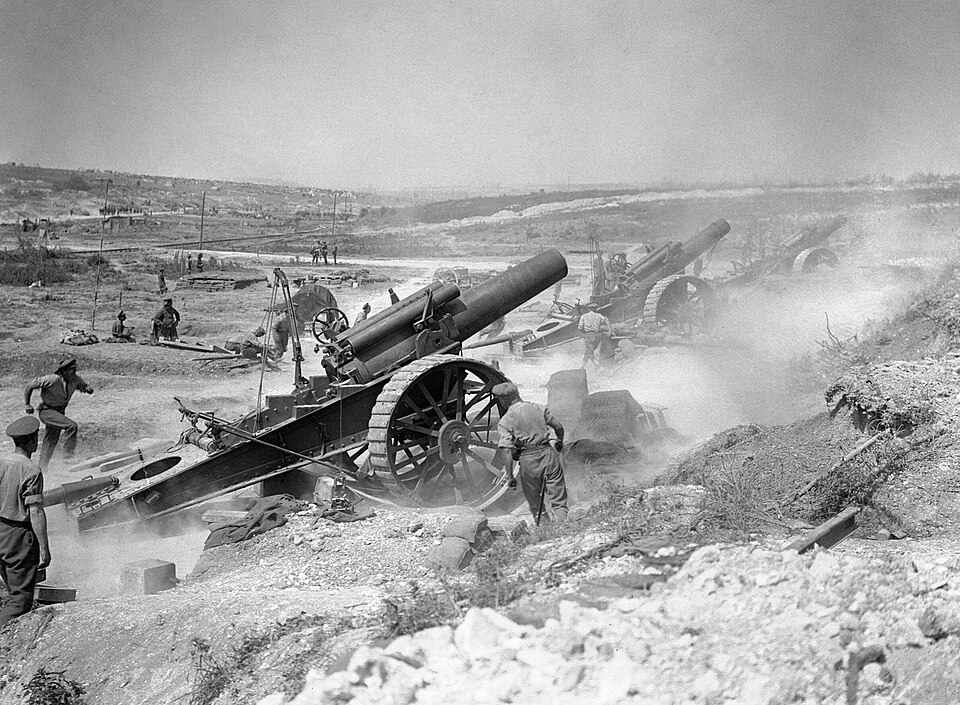
Entering into the 20th century, there is World War I. As we know, in our timeline, Portugal entered the war on the 9th of March, 1916, after a declaration of war by Germany due to Britain asking the Portuguese Republic to confiscate German ships docked in Portuguese ports. In this timeline, one can argue that the union would have a larger impact on the war, not only in the number of troops the empire could send to the front lines, but also a greater control of the Atlantic Ocean, especially in the south with both Brazil and Angola on both sides. The union could even have joined the war earlier, as again, it would ideally have more manpower, industry, and resources. If this was the case, the capture of German South West Africa may have seen involvement from the union, with the region possibly even being partly integrated into Angola by the end of the war, considering that even before the war the Germans had plans of annexing Angola themselves. Note that after the war, in 1919, Portuguese Mozambique was granted a territorial gain in our timeline, namely the Triangle of Kionga. Having said that, there’s the small possiblity that the international community could grant more territorial gains to Portuguese Angola, provided the union had a more active role. Again, this could be manageable, considering the union was still allied with Britain and a much more dependable partner for them.
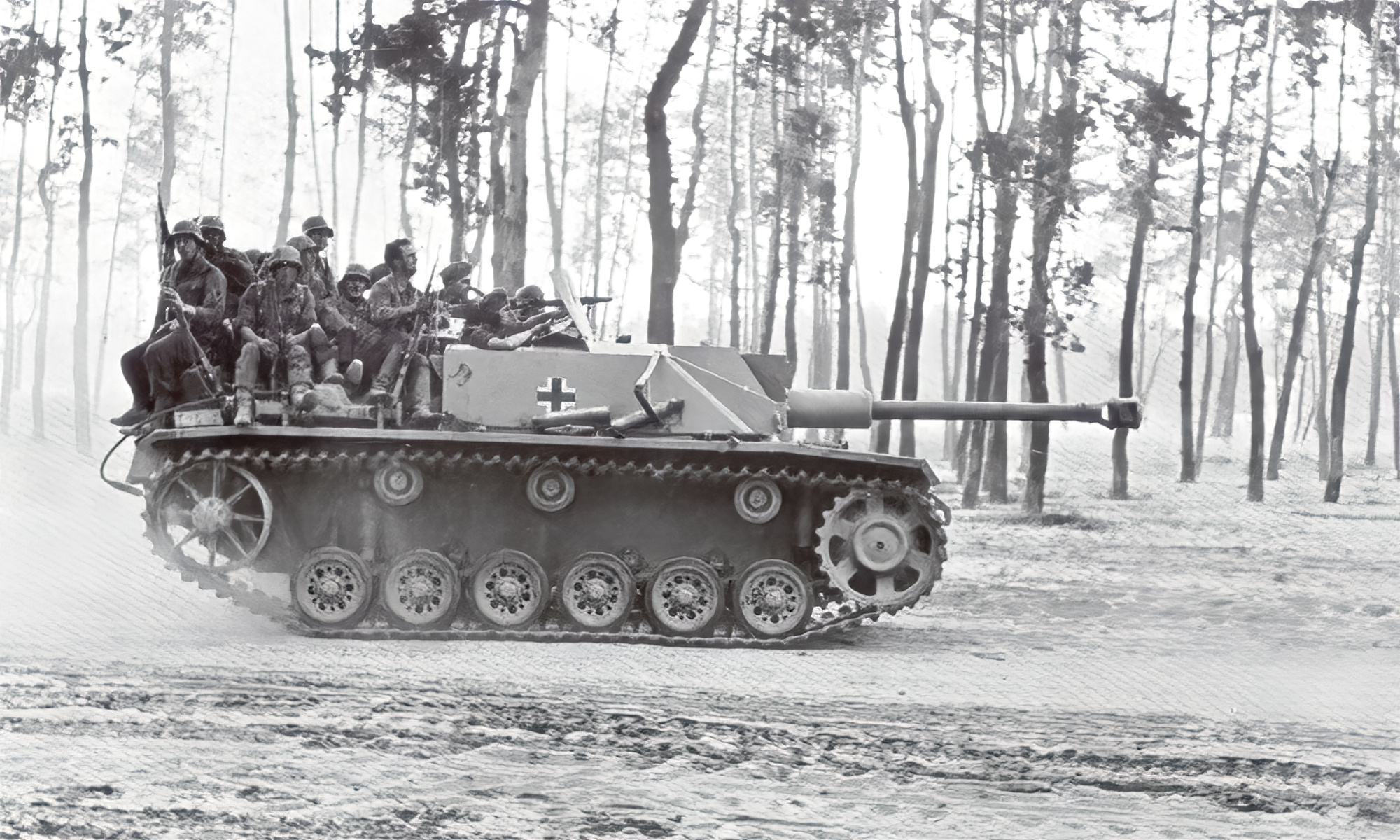
Two further points to address, as far as this post is concerned: WWII and the relation between the union and the European Union. Firstly, World War II. Assuming the union kept its existing regime, it is hard to argue against the fact that it would be closer to the Allied Powers than to the Axis. I do not see any reasonable evidence that argues that the union would side with Hitler and Mussolini, even if the king had a more conservative view. Understanding this, it is unlikely for the union to maintain complete neutrality, as Brazil and Portugal did in the real timeline; in 1943, Brazil signed a declaration to join the United Nations, effectively joining the Allied Powers. Therefore, in this alternate timeline, the union would be vital in maintaining control over the Atlantic, hindering Germany’s objective of sinking cargo ships and other battleships with their U-boats, similarly to World War I. Regarding the relation with Spain, in our timeline, Franco had a plan to invade Portugal, in case of either an attack by the British through Portuguese territory, or, less likely, as a way of annexing it. Salazar had a strict policy of neutrality, as Portugal had a very old alliance with Britain, but a new fascist order was emerging with Germany and Italy at the forefront which Salazar could not ignore and certainly not provoke. This neutrality was also fueled by the very weak military Portugal had, even compared to Spain, which had just fought a very deadly civil war a few years prior. In this alternate timeline, considering the union was definitely more powerful than Spain, both economically and militarily, there are two possible outcomes: either Franco maintains neutrality and fosters good relations with the Axis and the union, or, due to the threat posed by an Allied-friendly neighbour, sides with the Axis and invades Portugal, using the already prepared plans for Operation Isabella made by the National Socialists. In case of an invasion, the union would definitely have more troops and armaments ready to defend Lisbon until the Allied forces arrived, at least initially. This would then open another front that the Axis powers would have to supply, draining their resources even faster. If this battle had ended up happening, it is hard to predict how it would go. However, at the end of it, in the case of an Allied victory, the union could have legitimacy to exert pressure on Spain to return Olivença, along with other smaller territories along the Portuguese-Spanish border. Note that these are rightfully Portuguese according to the signed Treaty of Vienna in 1815, so it certainly would not be out of the question for them to be returned. Overall, not much would change after World War II with a Lusitanian Empire on the map, considering it would not be up to par with the main powers like Britain or the United States, being relegated to a secondary power. It would however prove a good partner for other campaigns like Operation Husky in 1943 and later Operation Neptune - popularly called D-Day - in 1944. Provided the union maintained its stability under a semi-constitutionalist monarchy, it would definitely keep thriving after the war, entering the second half of the 20th century not only with the industry boost made during the war, but also with closer relations with the Allies due to the trade possible with the resources from the Brazilian territory and the other provinces like Angola.
After WWII, the Cold War began, in which the world’s greatest powers, namely the United States of America and the Soviet Union, entered a rivalry in regards to nuclear weapons. These powers fostered regimes favourable to them in other newly created countries, sometimes both in the same country, creating proxy wars in the process. In the late 1950s, with the Treaty of Rome, the European Economic Community (EEC) was formed. Many countries would join, including France, West Germany, Italy, the United Kingdom, and others, with the prospect of achieving tighter integration among the different economies, as well as to promote peace between the different countries. Yet, the following question would remain: would the Lusitanian Empire join the EEC which would later become the EU? I do not believe so, in fact, this union would not have any reason to join the EEC. The motive is very simple: this empire would not gain anything by integrating with the other countries, as it would be self-sufficient by itself. In particular, the union would have plenty of natural resources in Brazil and the Africa, plenty of industry built and fostered during the war, a much improved road network, military, schools, and more. As such, realistically, the union could join other alliances, most notably NATO in 1949. Maybe also the United Nations around the same time, and even the League of Nations before the war. However, the union could later achieve some level of integration with the EU without being a member, namely related to the European single market, for example, similarly to Switzerland. It would prove beneficial to the EU in the end as well, as the union would be in a very unique spot in which it would serve as bridge between South America, Africa, Asia, and the other European countries, thus making the EU more important internationally and outside of Europe.
Thank you so much for reading up to this point. I had a blast writing all of this, researching and consulting books, essays, websites, and other pertinent resources. I even took a look at other, more unrelated subjects -but still pertinent to the post- such as the creation of the League of Nations, the composition and different institutions of the European Union, the way that Portugal managed its overseas provinces during the Estado Novo, and more. I have to say that the initial part of documenting and explaining our timeline was relatively easy, but to offset that, the alternate timeline proved to be particularly difficult to formulate with rigor and objectivity. A very easy pitfall is to simply forget the real life context and imagine a world favourable to a particular event, when in reality there are many factors that can prevent a certain event from happening and as such, have to be addressed. For instance, when the union managed to suppress the liberal revolution and the constitutionalists, I could not forget about them simply because the absolutists won the battle, these revolutionaries would still be conspiring and finding new ways and weaknesses in the current government to exploit, waiting for national scandals to happen. As such, I had to find ways for this government to win over the population and most of all, make them competent in the eyes of the liberals, making concessions when realistically possible to appease them and finding common ground between the two sides for the nation to thrive, considering the very deep problems the union had at that time. It is not easy, so, I think I managed to keep this idea from start to finish and the final product really makes me proud. Obviously, it is clear that the entirety of this post was an optimistic scenario for attempting to keep the union together. There would be other hurdles that would not be as easily overcome, like the problem of the distance between the different territories that affected other great empires like the English empire, the Spanish empire, and others.
Also, I hope I could, in a way, convey that a monarchy is not inherently backwards and stale. Now, it was not the main point of this article, but, particularly here in Portugal, people tend to have that stigma regarding a king ruling over a country. Personally, I do not find that to be true, since, even historically, there are plenty of republics which were more stale than monarchies, for instance. I would go as far as to say that any kind of governing body can function positively so long as there are no personal motives involved in regards to the people in power.
Finally, to wrap this up, a very special thanks to Churo and Willy for their help with this post. Without them, this would not be nearly as polished as it ended up becoming.
Take care and see you next time!
Citations
A Revolução liberal,
[Online]. Available: https://www.parlamento.pt/Parlamento/Paginas/A-Revolucao-Liberal-1820.aspx [Accessed: Jun. 30, 2026].- L. Gomes, 1808: Como uma rainha louca, um príncipe medroso e uma corte corrupta enganaram Napoleão e mudaram a história de Portugal e do Brasil. Globo Livros, 2014.
- A. Martins,
1821, O Regresso Do Rei. A História De Uma Viagem Estratégica “À Frente Do Seu Tempo.”,
Nov. 1, 2021. [Online]. Available: https://www.rtp.pt/noticias/cultura/1821-o-regresso-do-rei-a-historia-de-uma-viagem-estrategica-a-frente-do-seu-tempo_n1359203 [Accessed: Jun. 30, 2026]. - L. Moritz Schwarcz, A. da Costa e Silva, L. Bastos Pereira das Neves, R. Ricupero, and J. Caldeira, História do Brasil Nação: 1808 - 2010 Volume 1 | Crise colonial e independência 1808 - 1830. Editora Objetiva, 2011.
- T. Monteiro, História do Império: a elaboração da independência, 1803 - 1823. Senado Federal, 2018.
- Wikipedia Contributors,
Inconfidência Mineira,
Jul. 4, 2005. [Online]. Available: https://en.wikipedia.org/wiki/Inconfid%C3%AAncia_Mineira [Accessed: Aug. 24, 2026]. - Wikipedia Contributors,
Tiradentes,
Apr. 3, 2004. [Online]. Available: https://en.wikipedia.org/wiki/Tiradentes [Accessed: Sep. 9, 2026]. - Wikipedia Contributors,
Conspiracy of Suassuna,
Oct. 25, 2010. [Online]. Available: https://en.wikipedia.org/wiki/Conspiracy_of_Suassuna [Accessed: Sep. 9, 2026]. - Wikipedia Contributors,
Bahian Conspiracy (1798 Revolt of the Alfaiates),
May. 18, 2015. [Online]. Available: https://en.wikipedia.org/wiki/1798_Revolt_of_the_Alfaiates [Accessed: Sep. 9, 2026]. - Wikipedia Contributors,
Sinédrio (Portugal),
Jun. 4, 2005. [Online]. Available: https://pt.wikipedia.org/wiki/Sin%C3%A9drio_(Portugal) [Accessed: Sep. 10, 2026]. - Wikipedia Contributors,
Sanhedrin,
Jan. 5, 2003. [Online]. Available: https://en.wikipedia.org/wiki/Sanhedrin [Accessed: Sep. 10, 2026]. - Wikipedia Contributors,
Vintismo,
Dec. 1, 2005. [Online]. Available: https://pt.wikipedia.org/wiki/Vintismo [Accessed: Sep. 10, 2026]. - L. Costa Días and P. Jorge Fernandes, 24 de Agosto de 1820: A revolução em imagens. Biblioteca Nacional de Portugal, 2022.
- Junta Provisional do Governo Supremo do Reino, Manifesto aos Portuguezes, 1820. [Online]. Available: https://upload.wikimedia.org/wikipedia/commons/3/33/Manifesto_aos_Portugueses.jpg
- Junta Provisional do Governo Supremo do Reino, Carta dirigida a Elrei o Senhor D. João VI pela Junta Provisional Do Governo Supremo do Reino; estabelecida na cidade do Porto, 1820. [Online]. Available: https://www2.senado.leg.br/bdsf/bitstream/handle/id/242804/000142472.pdf?sequence=1&isAllowed=y
- A. Jorge,
D. PEDRO IV - Príncipe Regente - Imperador - Rei Maçom - Maçonaria e Maçon(s),
Nov. 15, 2024. [Online]. Available: https://www.freemason.pt/d-pedro-iv-principe-regente-imperador-rei-macom/ [Accessed: Jun. 30, 2026]. - Wikipedia Contributors,
Pedro I of Brazil,
Sep. 6, 2002. [Online]. Available: https://en.wikipedia.org/wiki/Pedro_I_of_Brazil [Accessed: Aug. 24, 2026].
Other references
Essays
Moura, Carlos André Silva; Silva, Edjaelson Pedro da. Acordos entre a coroa inglesa e o Brasil para a “liberdade” de culto: debates a partir de uma ordem jurídica no início do século XIX. Revista de Estudos da Religião, v. 20, no. 2 (2020). https://revistas.pucsp.br/rever/article/viewFile/50702/33123%26cd%3D11%26hl%3Dpt-BR%26ct%3Dclnk%26gl%3Dbr
Webpages
Dom João VI e a biblioteca nacional, o papel de um legado. (n.d.). https://bndigital.bn.gov.br/exposicoes/dom-joao-vi-e-a-biblioteca-nacional-o-papel-de-um-legado/a-volta-de-d-joao/
Almanaque Republicano. (n.d.). REVOLUÇÃO DE 1820 – HERÓIS QUE FUNDARAM o SINÉDRIO. https://arepublicano.blogspot.com/2013/08/revolucao-de-1820-herois-que-fundarm-o.html
Correia, G. O. a. W. (n.d.). D João VI. https://web.archive.org/web/20120713015849/https://bndigital.bn.br/djoaovi/cronologia.html
Wikipedia Contribuitors. (2026, August 8). Napoleão Bonaparte. https://pt.wikipedia.org/wiki/Napole%C3%A3o_Bonaparte
Pimentel, M. (2016, March 4). Presença inglesa: os novos colonizadores e os Tratados de 1810. MultiRio. https://multi.rio/index.php/historia-do-brasil/brasil-monarquico/88-a-corte-no-rio-de-janeiro/8852-presen%C3%A7a-inglesa-os-novos-colonizadores-e-os-tratados-de-1810
4 de Julho | D. João VI desembarca em Lisboa e jura as bases da Constituição. (n.d.). https://dpedroiv.parquesdesintra.pt/cronologia/1821/julho/4/d--joao-vi-desembarca-em-lisboa-e-jura-as-bases-da/62#datas
Audiovisual Material:
A Maçonaria em Portugal WebMandocsPT. (2012, December 31). Maçonaria em Portugal - Video -. YouTube. https://www.youtube.com/watch?v=-Q-dwUDqcdg